Modernization of the processing plant
“Only buildings immortalize people in the intervals of time” — this phrase accurately conveys the philosophy of industrial development: behind every modernization lies not only investment in equipment, but also engineering work, technological solutions, and managerial vision calculated for years to come.
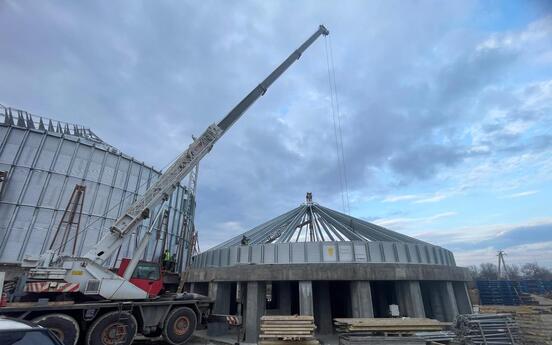
The modernization of the preparatory workshop of one of Ukraine's processing enterprises became a showcase case for integrating a new technological line into a limited space without rebuilding capital structures. The main task was to increase processing capacity to 1,000 tons/day of soybeans, 750 tons/day of rapeseed, and 1,200 tons/day of sunflower seeds, while maintaining the continuous operation of the existing line.
Key requirements for the equipment included custom design taking into account the existing workshop layout, product specifics (corrosion resistance, operation at elevated temperatures), and a level of reliability comparable to European counterparts.
To understand the scale: after reconstruction, the line is capable of receiving and processing up to 1,200 tons of sunflower seeds per day, which is equivalent to more than 50 fully loaded truck trains.
Second line in confined spaces and without stopping production
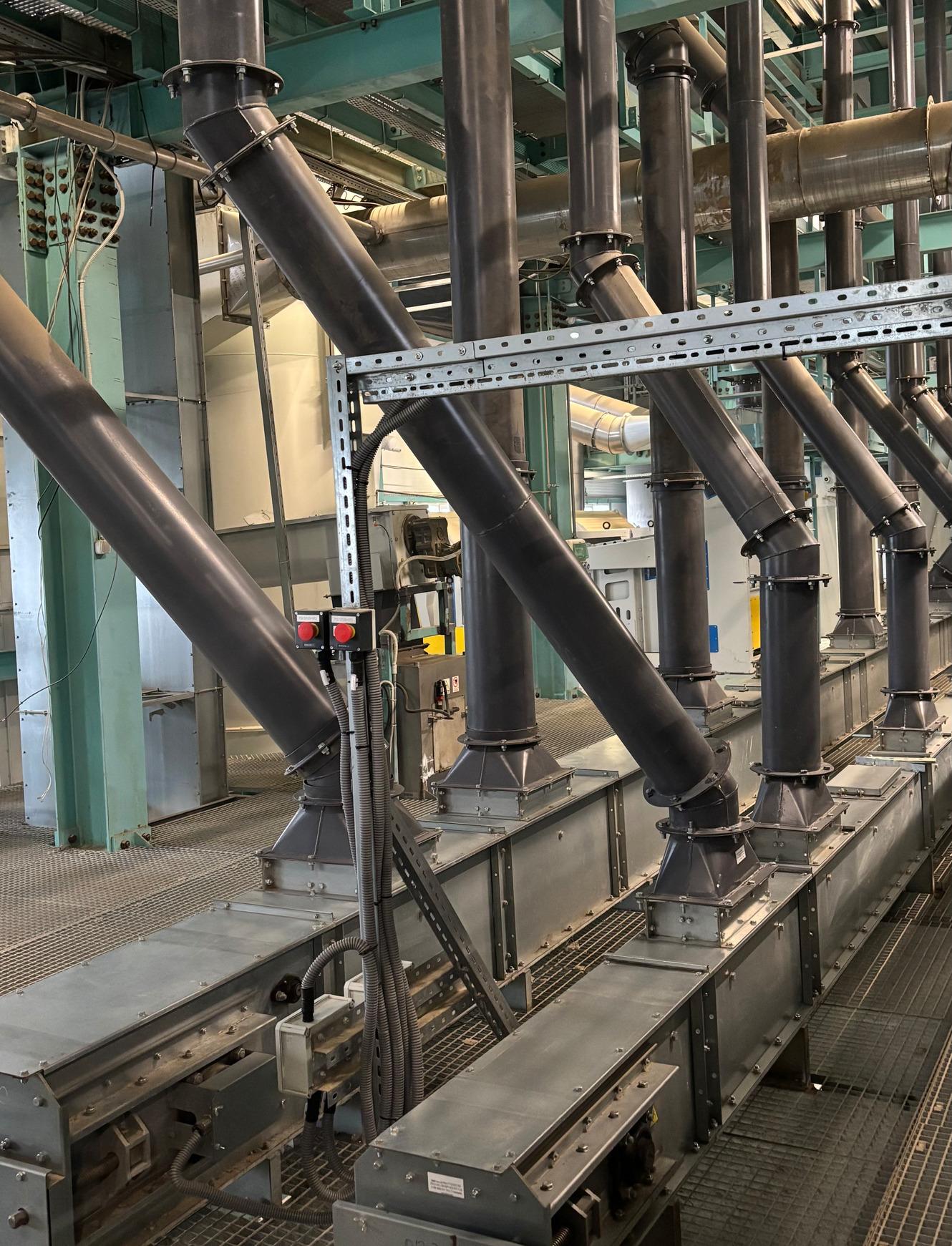
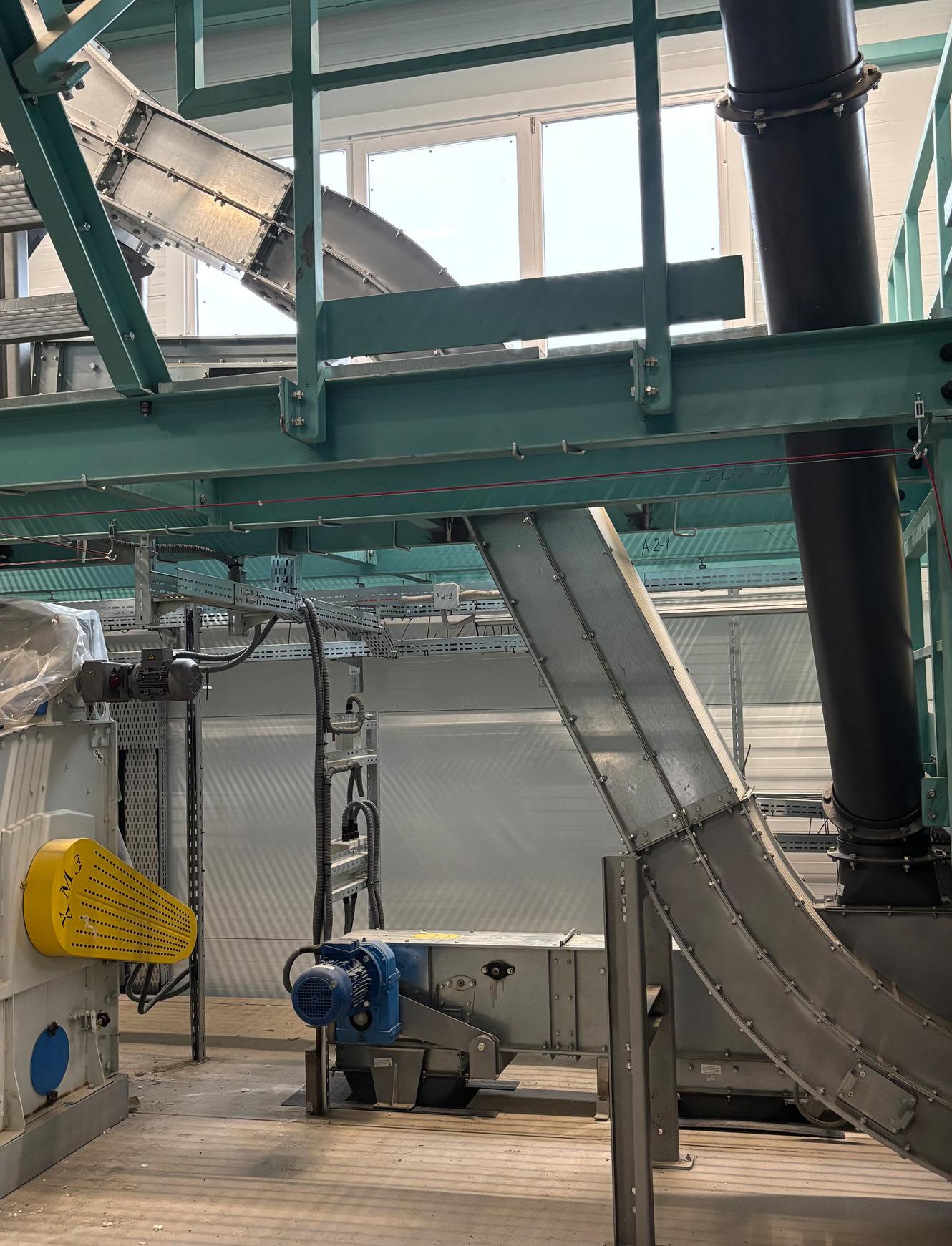
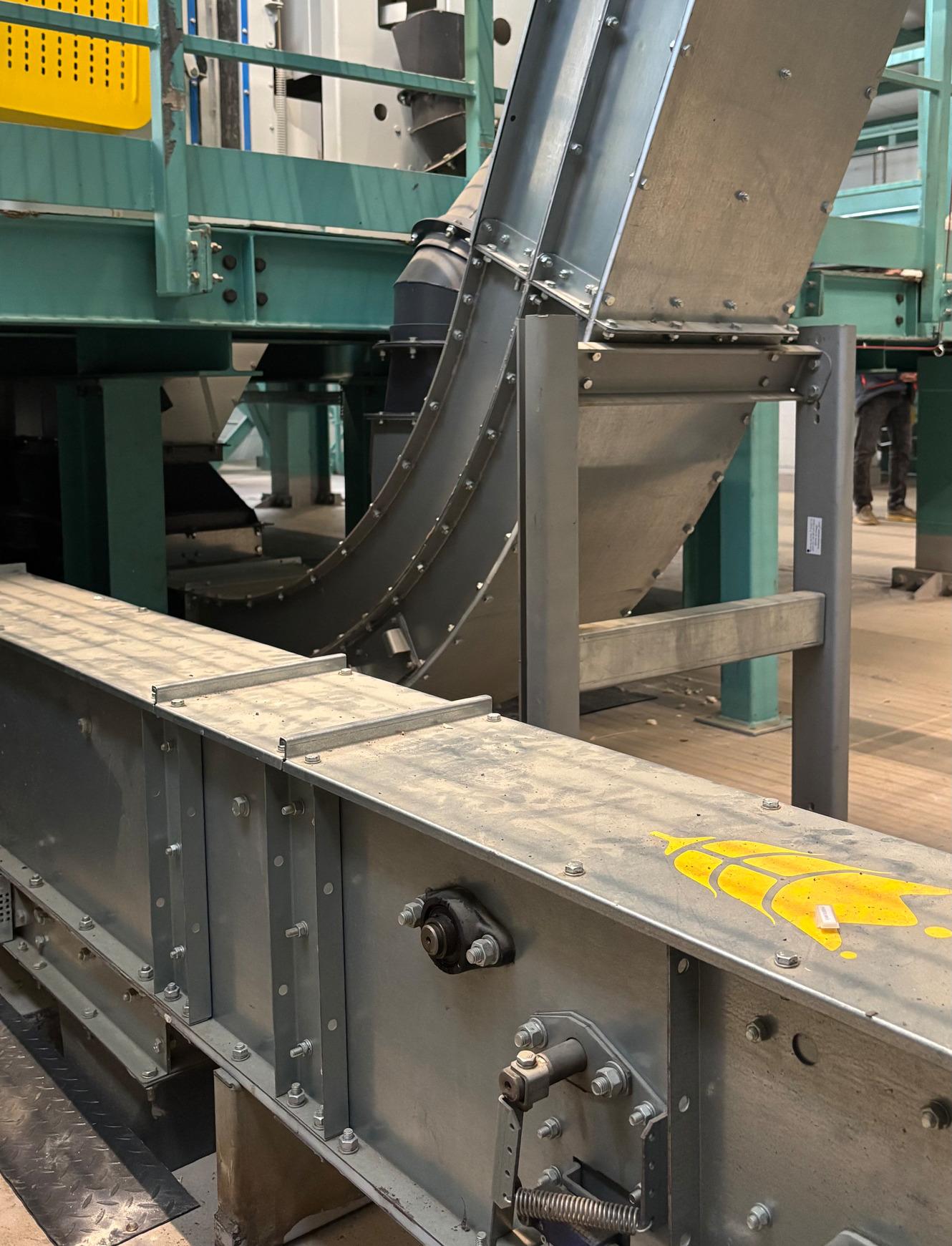
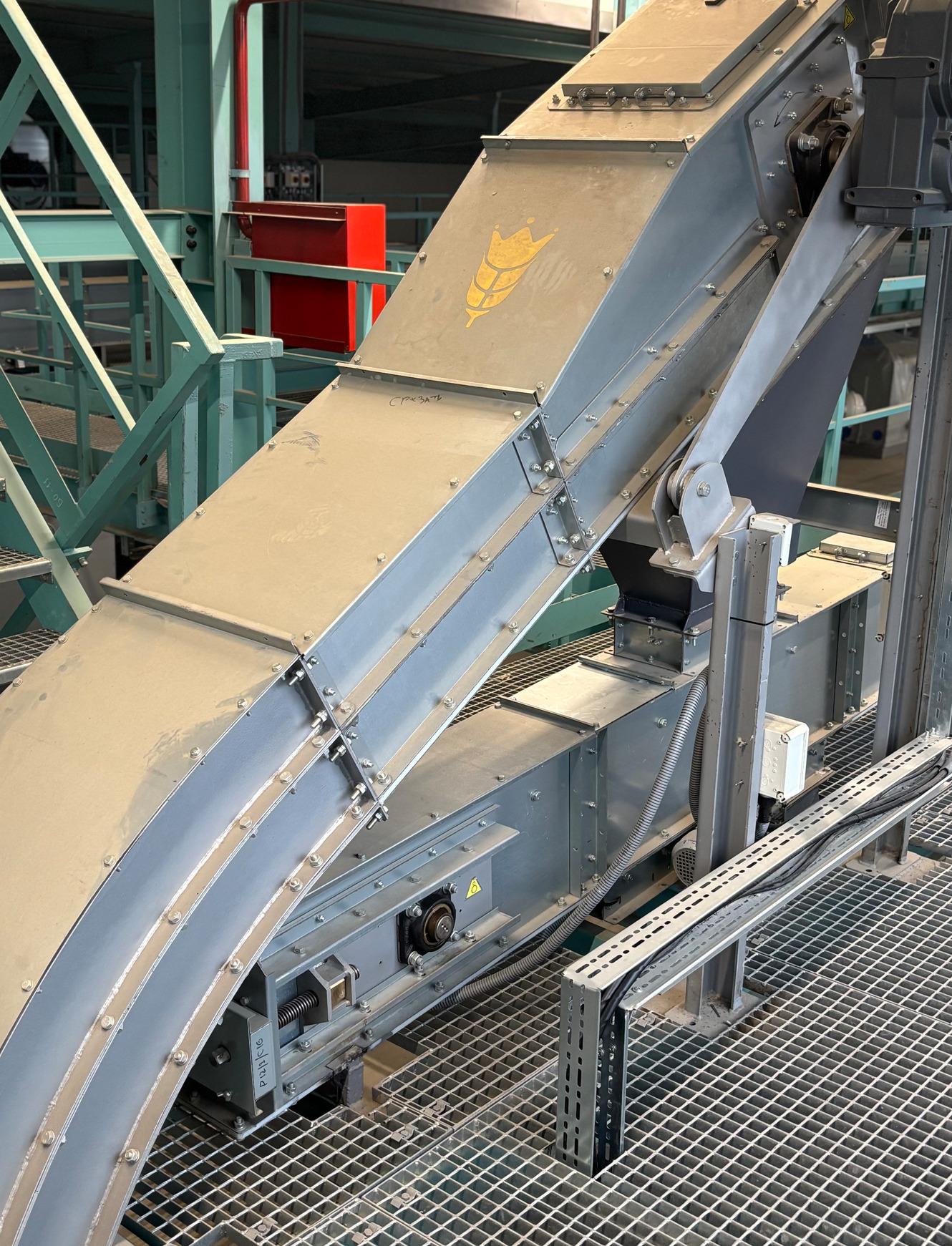
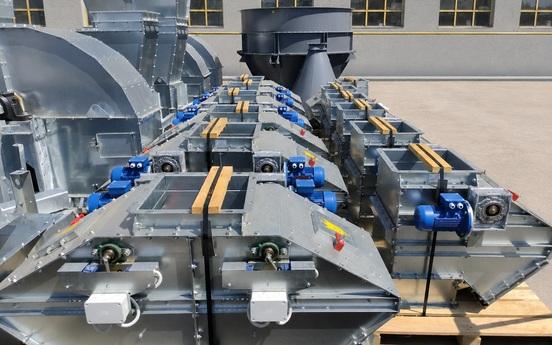
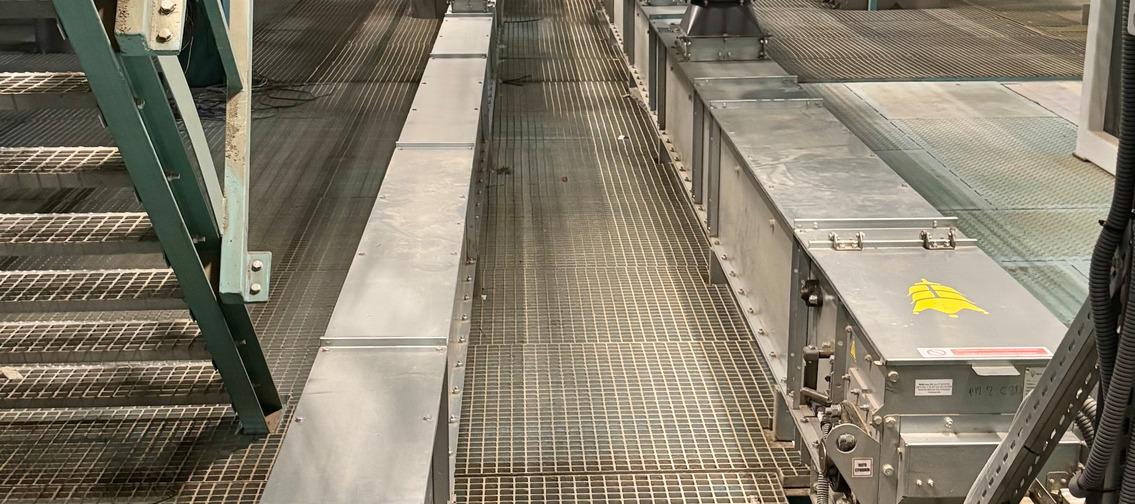
At the start of the project, one production line was already operating in the workshop. The second line had to be integrated into the existing infrastructure without interrupting the production process, in an environment with maximum density, where every meter and every change in the direction of transport is critical. Special conveyors, known as “goosenecks,” were installed to move the product. These conveyors allow the direction of material flow to be changed and technological obstacles to be bypassed without loss of productivity.
The transport nodes were selected taking into account the different bulk densities of the products — from light sunflower husks (about 0.12 t/m³) to heavy grain crops (up to 0.8 t/m³).
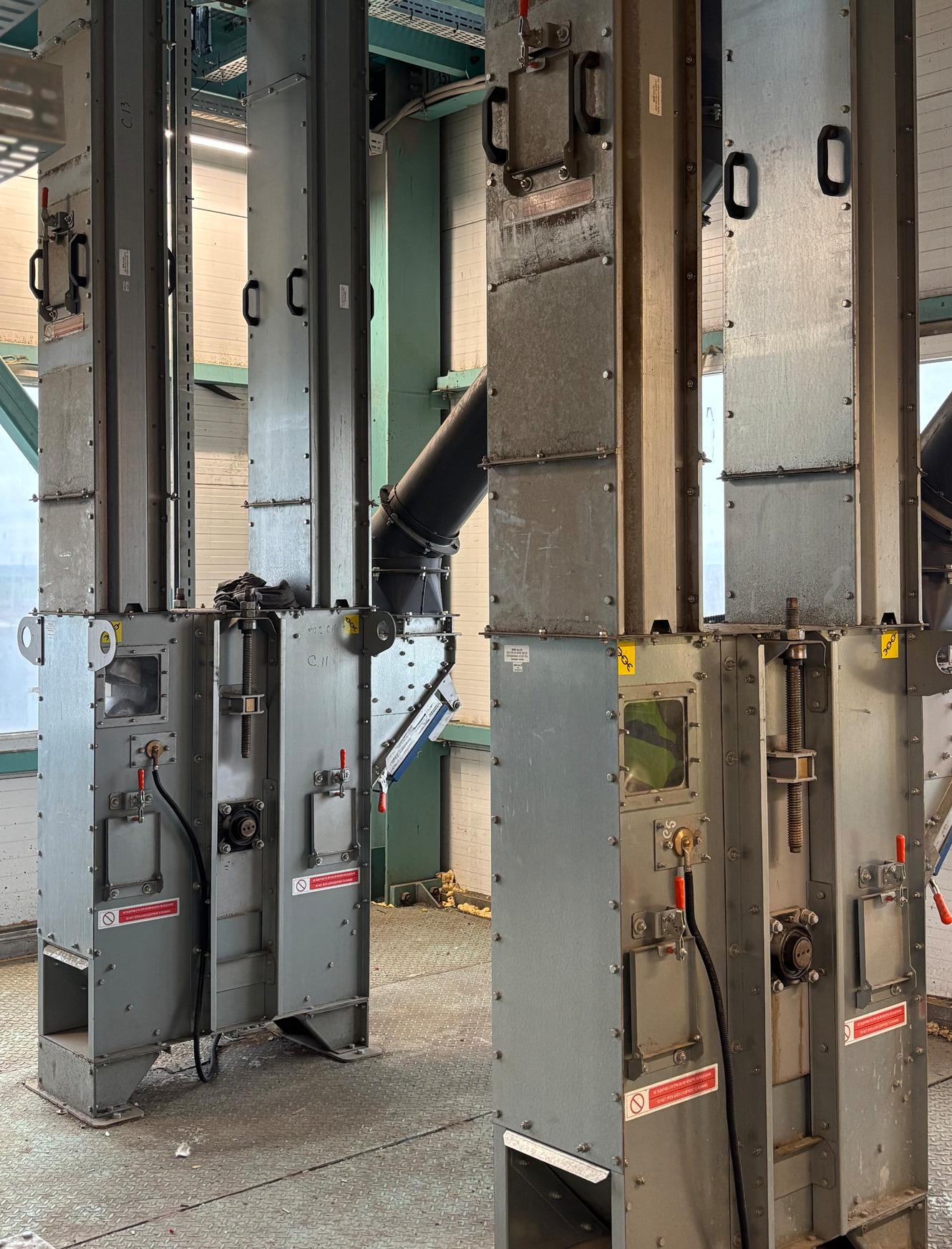
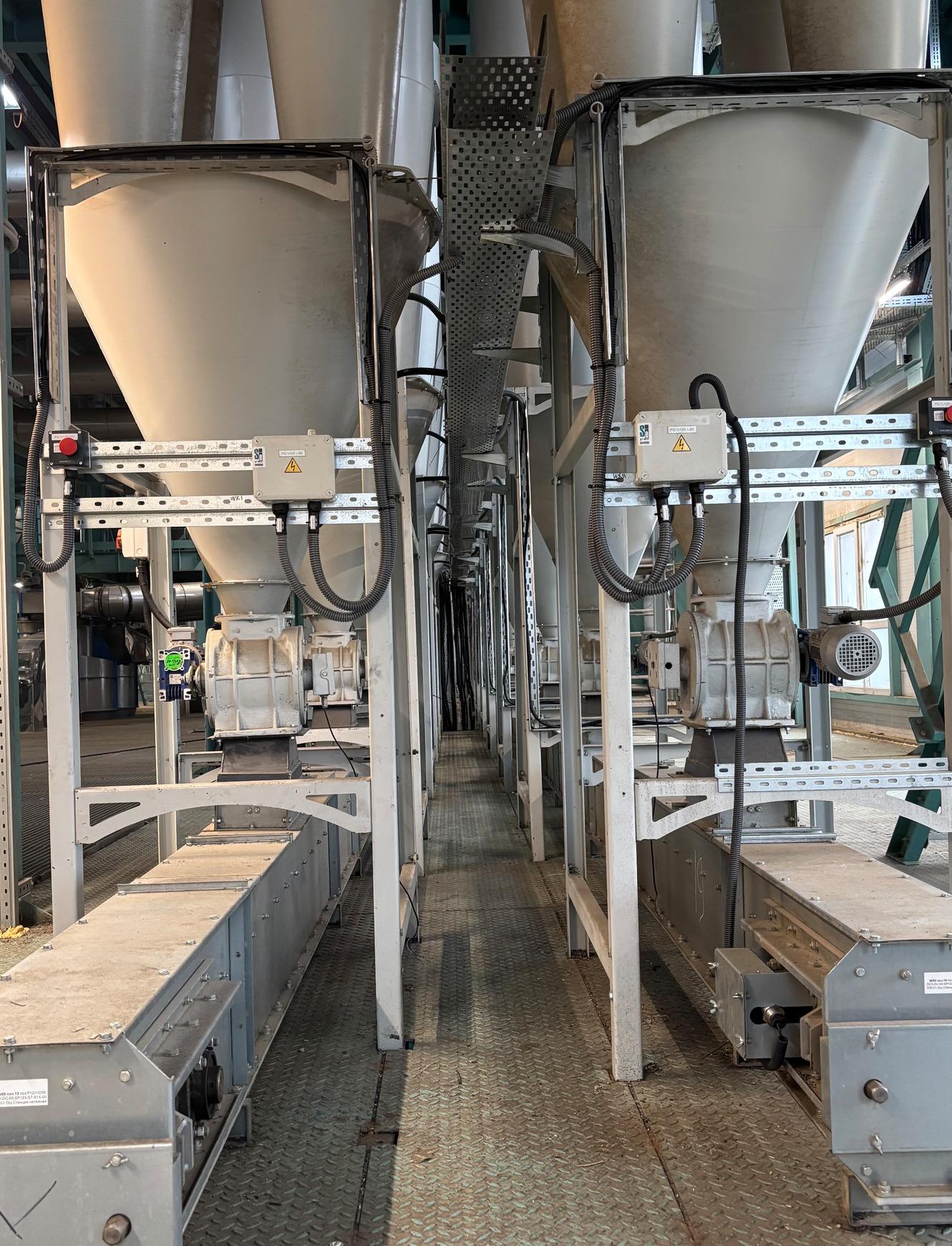
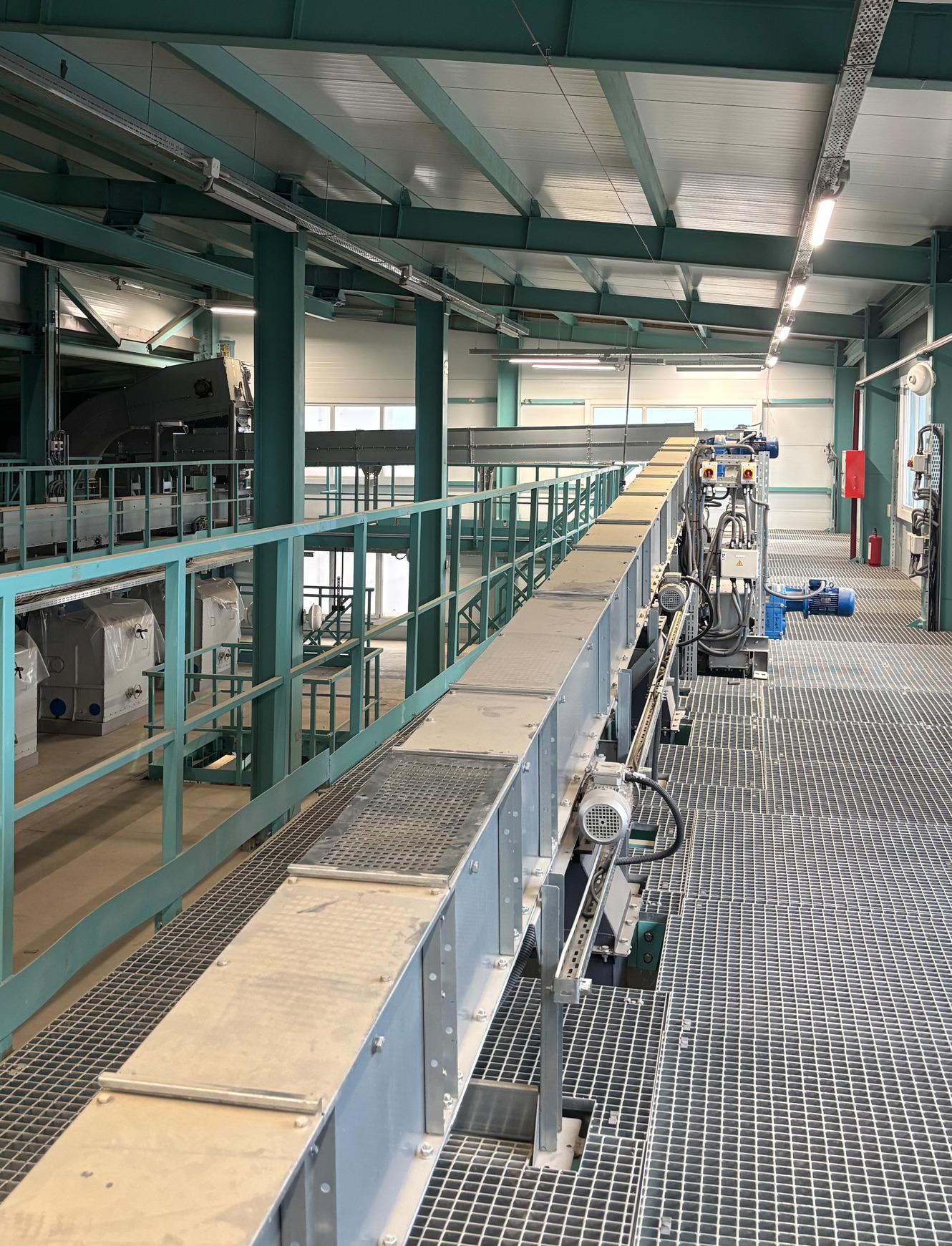
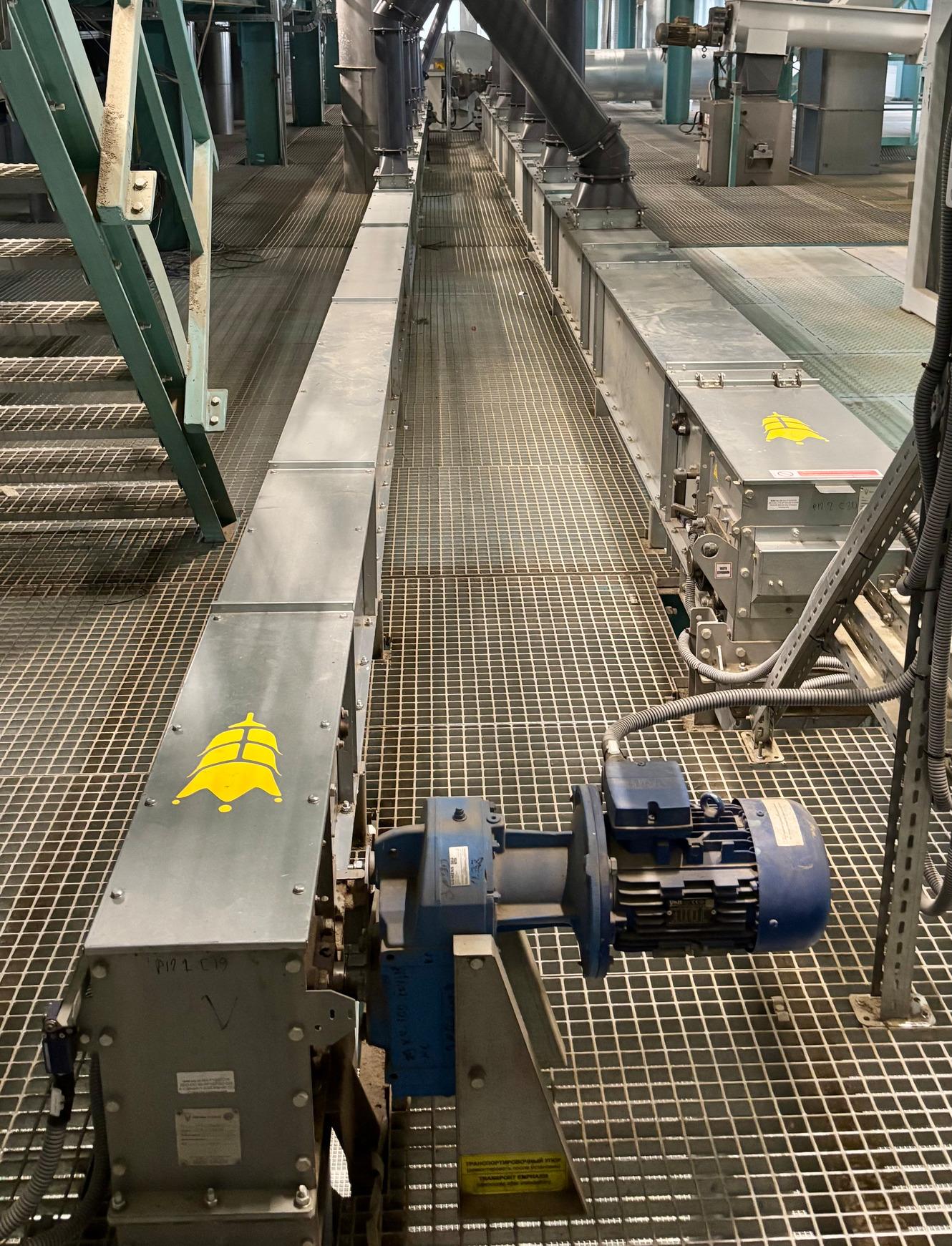
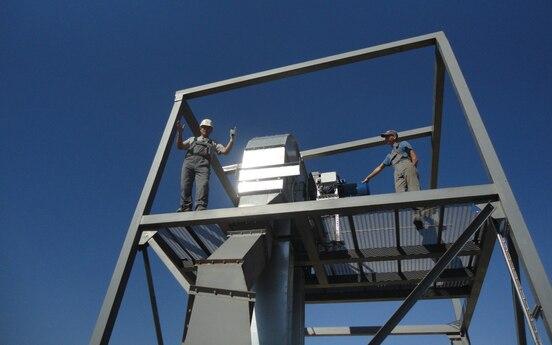
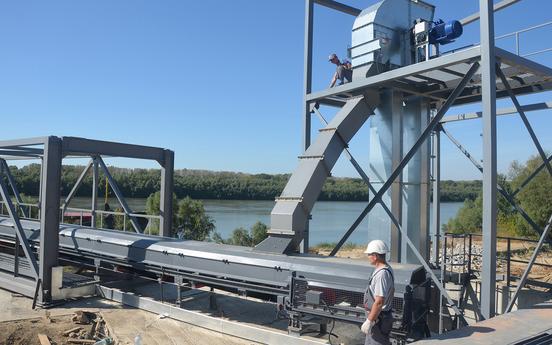
ZEO-BE series bucket elevators and ZEO-DC chain conveyors were integrated into the existing technological scheme. The installation of gravity flow equipment was carried out on site by Grain Capital specialists, which allowed for precise connection of the units and ensured uninterrupted operation of the line.
Working in aggressive environments
During the reconstruction, special attention was paid to areas with elevated temperatures and aggressive environments. During the extraction and granulation processes, the product temperature can reach 80–90 °C, and the presence of residual solvent in the meal creates additional corrosion risks.
For such areas, the body and conveyor chains were made of stainless steel, and the lining was selected to be chemically resistant and antistatic. Control sensors and bearing assemblies were integrated directly into the transport system, ensuring the reliability and durability of the equipment in the dense configuration of the workshop.
“The equipment was integrated without rebuilding the workshop and works stably with different crops and temperature regimes. This has increased productivity and production efficiency,” notes a representative of the production department.
Result
After the renovation, the prep shop can now handle multiple crops without changing transport routes and can withstand high temperatures and harsh environments. The transport system ensures smooth product flow from raw material reception to by-product shipment.
This case study demonstrates that even within existing production buildings with complex geometries, it is possible to significantly increase processing productivity and flexibility through adapted equipment, precise design, and professional installation.