Cyclones vs Bag Filters: Choosing the right filter for your needs
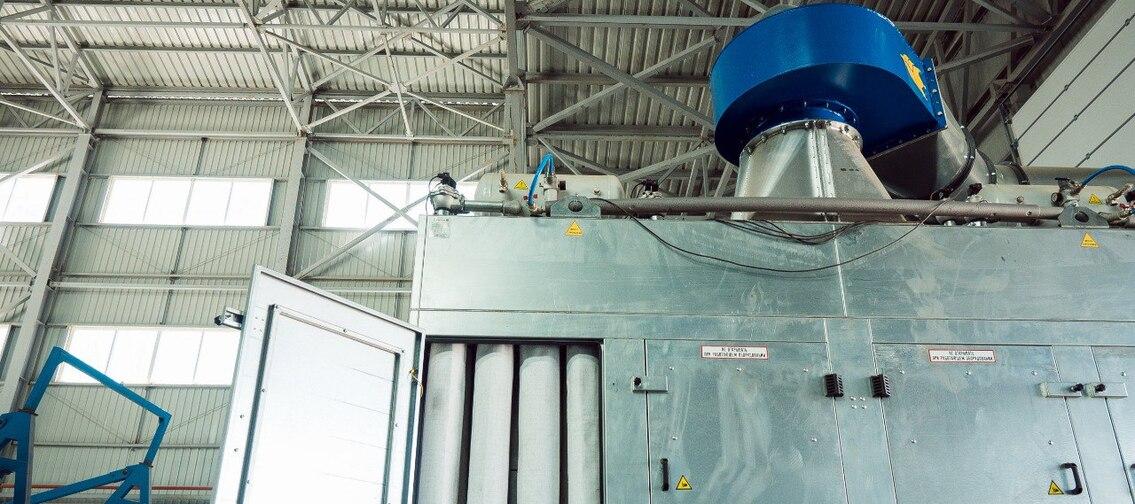
Industrial dust in process streams is a matter of air quality, equipment wear and safety risks. That's why in practice, there is almost always a choice between two approaches. Mechanical separation without filter media, or fabric filtration with a high degree of capture. To make the right choice, it is important to understand what filters are, what mechanisms they use, and how this affects operation.
Principle of operation of cyclone filters
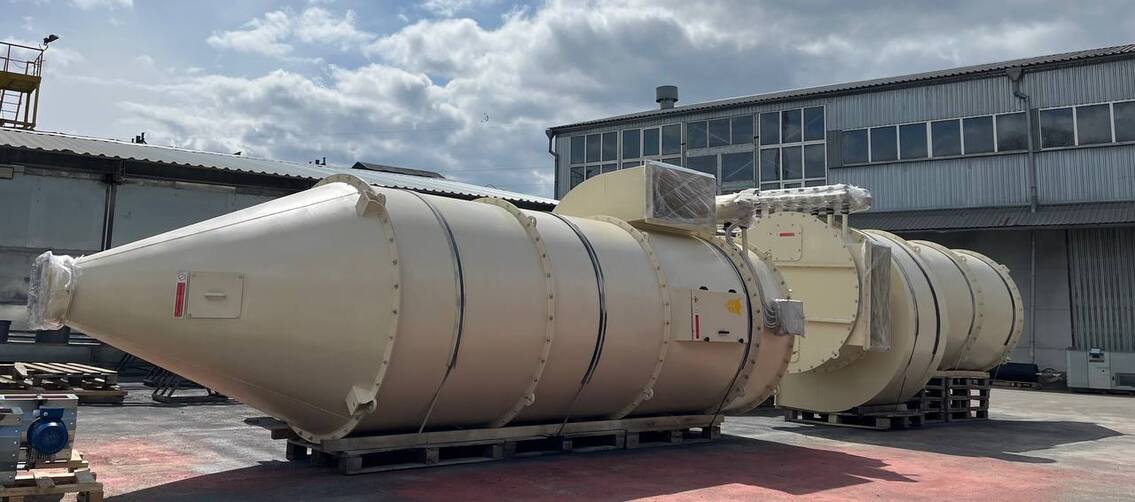
The cyclone filter works on centrifugal force. The dusty air is fed tangentially into the housing and swirled into a vortex. Particles with greater inertia are thrown against the walls, lose speed and settle into the hopper. The purified air is discharged through the central nozzle. In essence, it is a cyclone dust collector where the role of separation is performed by aerodynamics, not fabric.
The advantage of this approach is resistance to high dust loads and ease of maintenance. That is why air cleaning cyclones are often used as the first stage where dust is abrasive or abundant. In the grain and processing industry, such types of installations as a single-stage grain cyclone or a battery cyclone installation (4BTSh) are more commonly used. They effectively remove the first coarse fraction of dry dust, but the efficiency of cleaning the fine fraction in such installations is low.
Principle of operation of bag filters
Bag filters trap particles on the surface or in the thickness of the filter media. The dusty air passes through the sleeves, the particles form a layer of dust, and it is this layer that increases the fineness of cleaning over time. To ensure that the aspiration equipment does not lose performance due to increased resistance, regeneration with compressed air pulses or backflow is used.
To briefly summarize the bag filter and its principle of operation, it is a combination of filtration and controlled fabric cleaning. Such a bag filter provides a very high degree of fine fraction capture, but requires discipline in maintenance. It is also important to choose the right bag equipment for the temperature, humidity and chemical properties of the dust, otherwise caking, sticking, and accelerated wear are possible.
Efficiency: comparing bag and cyclone filters
The key difference is which particles the system removes best. The cyclone approach is more effective on coarse and medium fractions, especially when there is a lot of dust and stable operation without frequent stops is required. In such a scenario, the cyclone filter reduces the load on the fan and protects the downstream stages.
Bag filtration wins when fine cleaning and emission control are required. If the goal is to have the cleanest possible air filter at the outlet of the aspiration network, a bag system usually gives the best result. In practice, it looks like this. The cyclone filter removes the bulk of the dust, and the bag section selects the fine fraction. In total, this reduces maintenance costs and increases the service life of the hoses.
Hybrid filters
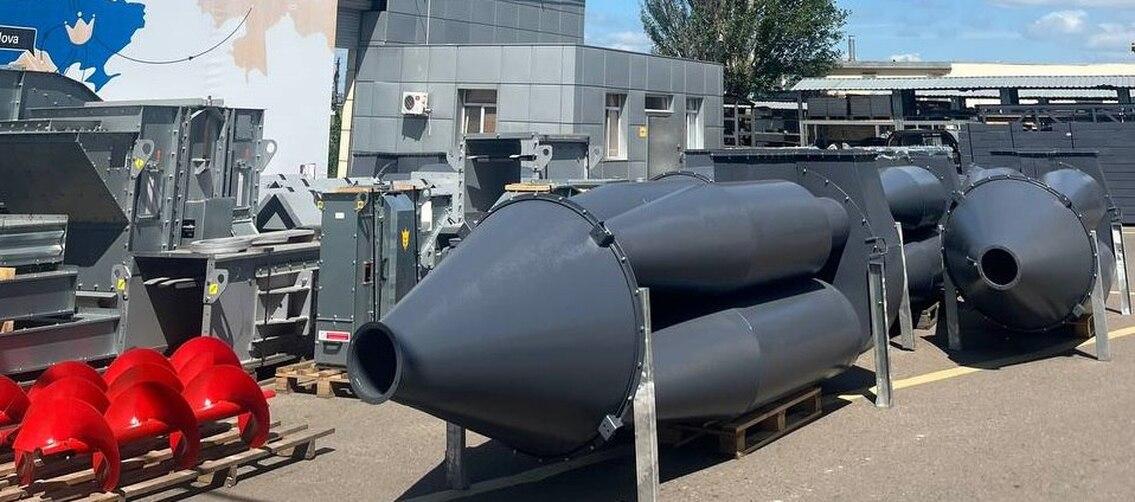
Hybrid solutions are a common engineering logic for complex flows. The most common variant is a combination where a cyclone dust collector is the first stage, followed by baghouse filtration as the second stage. Such filtration equipment strikes a balance between stability, energy consumption, and purification quality.
The hybrid approach is especially appropriate when dust is heterogeneous, there are load peaks, or it is important to reduce the frequency of regeneration. As a result, the sleeves wear out more slowly and the dust collectors operate predictably even during peak periods.
Costs and economic feasibility
The economics consist of capital costs and cost of ownership. Cyclone systems are usually simpler in design and cheaper to purchase. They do not have the cost of regular filter element replacement, but may not provide the required fineness of purification without a second stage.
Bag systems are more expensive due to the larger filtration area, automated regeneration, and maintenance requirements. An important nuance here is the replacement of hoses and pressure drop control. If high-purity air filters are required, a baghouse system is often justified even at a higher price, as the penalties for emissions, product loss, and downtime are usually more expensive.
Explosion protection and safety
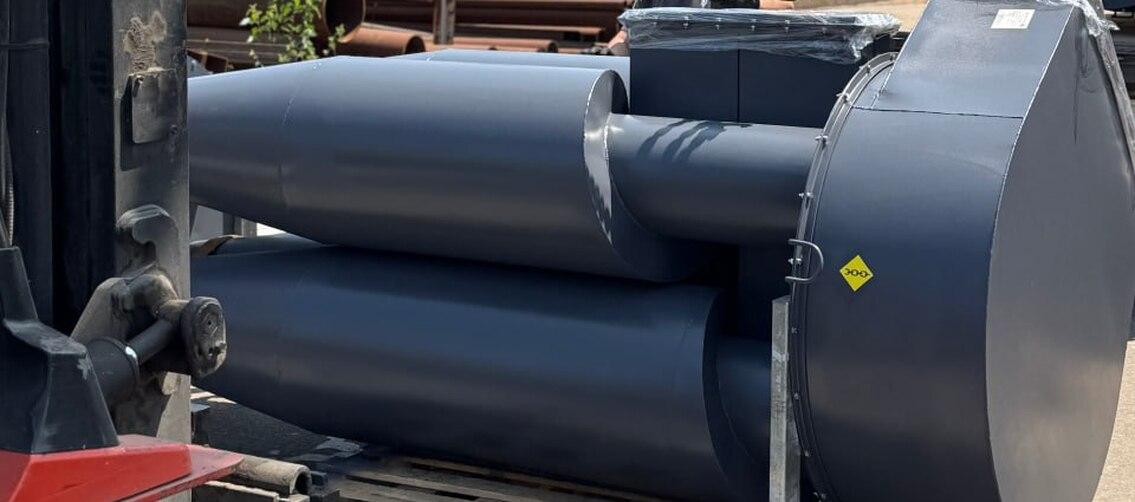
In the grain industry, safety is a critical issue due to the possibility of grain dust explosions. Therefore, a dust collector should be a mandatory part of the design of any transport and processing line. Dust is a potential source of ignition. If the concentration of dust in the air reaches a critical level, a small spark, an overheated bearing, or static electricity is enough to cause an explosion.
Selection algorithm: how to choose a filter for your needs
- Evaluate the dust. Fraction, abrasiveness, humidity, stickiness, temperature.
- Determine the cleaning requirements. Whether coarse separation or fine filtration is required.
- Record the mode of operation. Peaks in load, continuity, service availability.
- Check site constraints. Height, area, possibility of placing a hopper, access to service.
- Select the configuration. Single cyclone stage, baghouse system, hybrid.
If there is a lot of dust and it is mostly coarse, it is logical to start with a cyclone solution. If you need the cleanest possible air at the outlet, local bag filters are more often chosen, or, if centralized aspiration is required, a filter-cyclone combination. For an audit of aspiration networks, contact Grain Capital specialists who have been helping to design aspiration systems for 25 years and producing aspiration equipment that really works. Because in real projects, the result is not a universal recommendation, but an accurate selection for the raw materials, productivity, safety requirements, and energy constraints of the facility.