Grain Drying Unit: What to Consider at the Design Stage
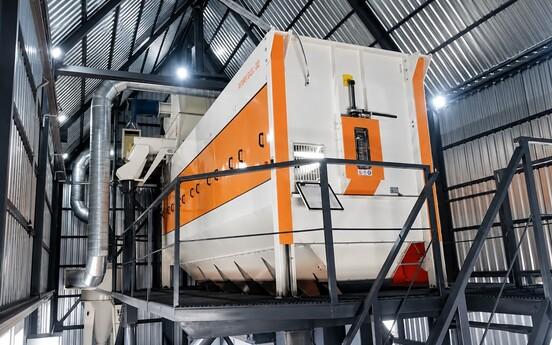
In the previous article, we mentioned a clear example: the rated capacity of a grain dryer and the actual capacity of the drying unit can differ significantly.
The reason lies in the operating conditions. Initial grain moisture content, crop type, ambient temperature and humidity, the available volume of wet grain, and the capacity of conveying lines all directly affect the performance of the drying unit.
Therefore, the design of a grain drying system begins with calculating the technological process.
What Determines the Actual Capacity of a Grain Dryer
Rated capacity is determined for specific operating conditions. According to the provided methodology for grain dryers, capacity is calculated in standard tonnes based on a specified moisture reduction and design ambient conditions.
When these conditions change, the actual capacity changes as well.
For example, when drying corn with an initial moisture content of 28–30%, capacity may decrease by 2–2.5 times. Higher humidity and lower ambient temperatures also slow down the drying process.
Therefore, the specific operating requirements are essential at the design stage: which crops will be handled, their initial moisture content, and the target moisture level.
Why Grain Conveying Equipment in a Drying Unit Needs Extra Capacity
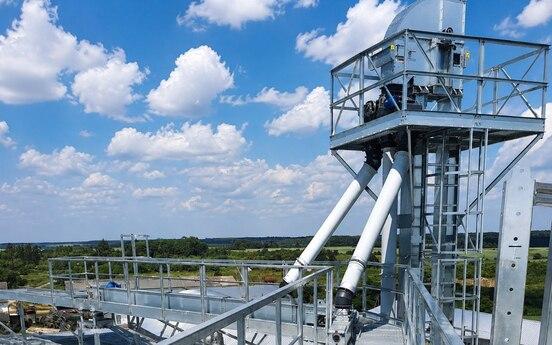
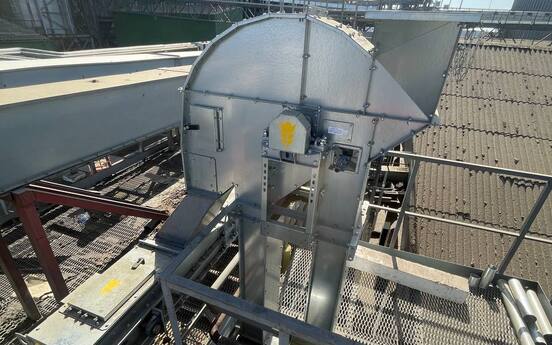
The dryer operates together with bucket elevators, conveyors, intermediate hoppers, and subsequent sections of the technological route.
Therefore, the rated capacity of the conveying equipment in the drying unit should be at least twice the rated capacity of the dryer.
This capacity margin is taken into account when designing the entire drying unit, rather than an individual machine.

Why Intermediate Hoppers Are Needed Before a Grain Dryer
Their primary function is to provide a buffer stock of wet grain and ensure a stable feed to the dryer.
It is recommended to provide at least two hoppers for wet grain. Their capacity should be calculated to support 8–24 hours of continuous dryer operation.
However, providing storage capacity is only one of their functions.
Two hoppers make it possible to separate grain according to its characteristics and form batches before drying.
Why Grain Should Be Grouped into Batches by Moisture Content
Grain received throughout the day can vary significantly in moisture content.
A simple example: one batch has a moisture content of about 20%, while another has 28%. If they are mixed and fed into the dryer under the same operating mode, achieving uniform results becomes more difficult: some of the grain may be overdried, while some may not reach the required final moisture content.
The more consistent the moisture content of the incoming grain mass, the more precisely the dryer operating parameters can be adjusted.
Therefore, intermediate storage bins before the dryer also serve as a technological tool for forming grain batches.
Why Hoppers Are Needed After a Grain Dryer
After leaving the dryer, grain does not always need to be sent directly to the main silos.
An intermediate hopper can accumulate dry grain while the conveying line is performing another operation. In such cases, storage capacity can be provided for 4–8 hours of dryer operation without starting the downstream conveying line.
Hoppers after the dryer can also be used for further grain cooling or as intermediate storage before separation.
Therefore, their purpose should be defined at the stage of developing the technological flow diagram.
Why Corn Should Not Be Dried Too Intensively in a Single Pass
In practice, a common rule is to reduce the moisture content of corn by no more than 5–6% in a single pass through the dryer.
The reason is related to the structure of the kernel. During intensive drying, the outer layers lose moisture quickly, while moisture remains inside. This creates internal stresses and microcracks.
Interestingly, the consequences may become apparent only after the grain leaves the dryer.
During subsequent conveying, the grain is subjected to mechanical loads, causing the microcracks to open and increasing the amount of broken grain.
Therefore, losses that may initially appear to be caused by conveying equipment can actually originate, at least partly, during the drying process.
Is the Drying System Designed the Same Way for Different Crops?
No. The source material distinguishes between dryer types and operating modes depending on the specific application.
Mixed-flow dryers are designed for large volumes of grain and oilseed crops. Conveyor dryers are used where gentle drying is required for small-seeded crops, oilseeds, or seed batches. For modular dryers, specific design features must also be taken into account when handling small-grain crops.
Therefore, the range of crops to be processed should be defined before selecting the type and capacity of the drying equipment.
Conclusion
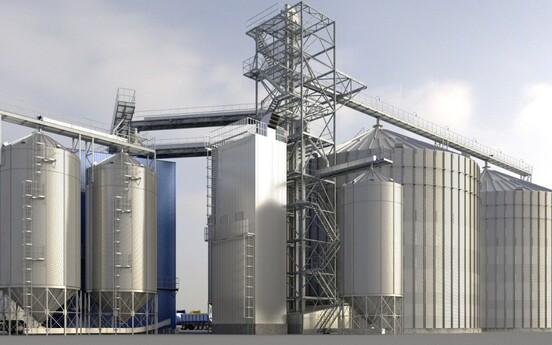
A grain drying unit consists of several interconnected elements:
dryer → wet grain buffer storage → batch formation → conveying before and after the dryer → intermediate dry grain storage → downstream technological routes.
An error in any one of these elements can limit the performance of the entire drying unit.
Therefore, the design should focus not on the rated capacity of the dryer alone, but on the capacity and stability of the entire drying process.
The photos used in this article were provided by Unia Grain.